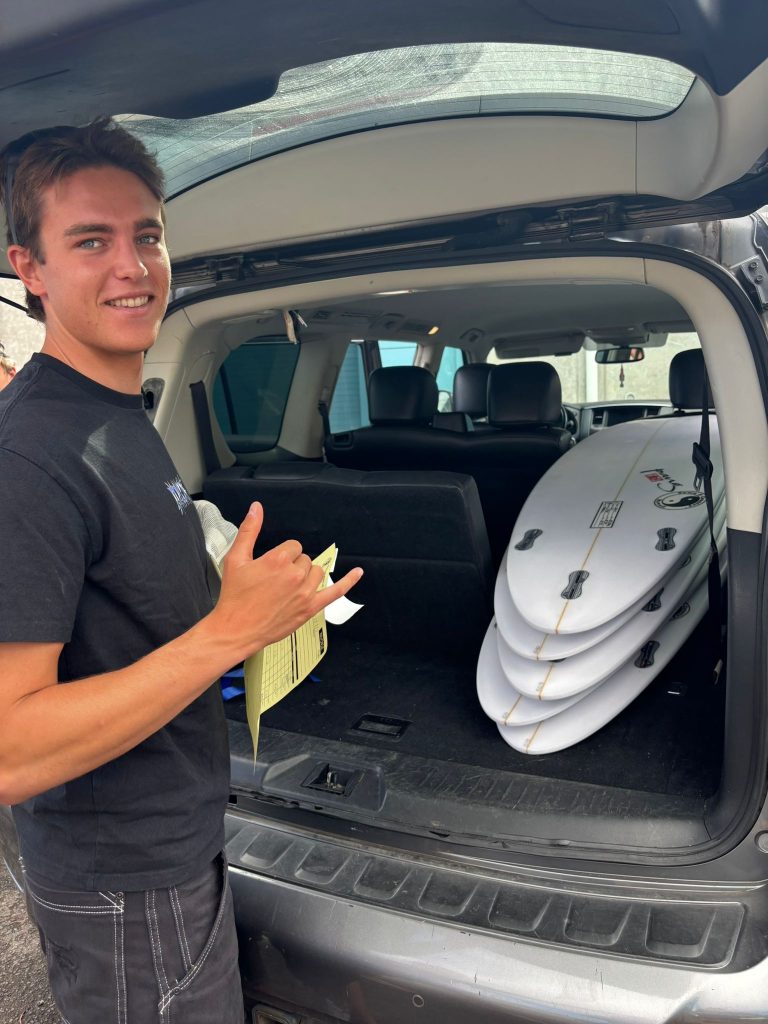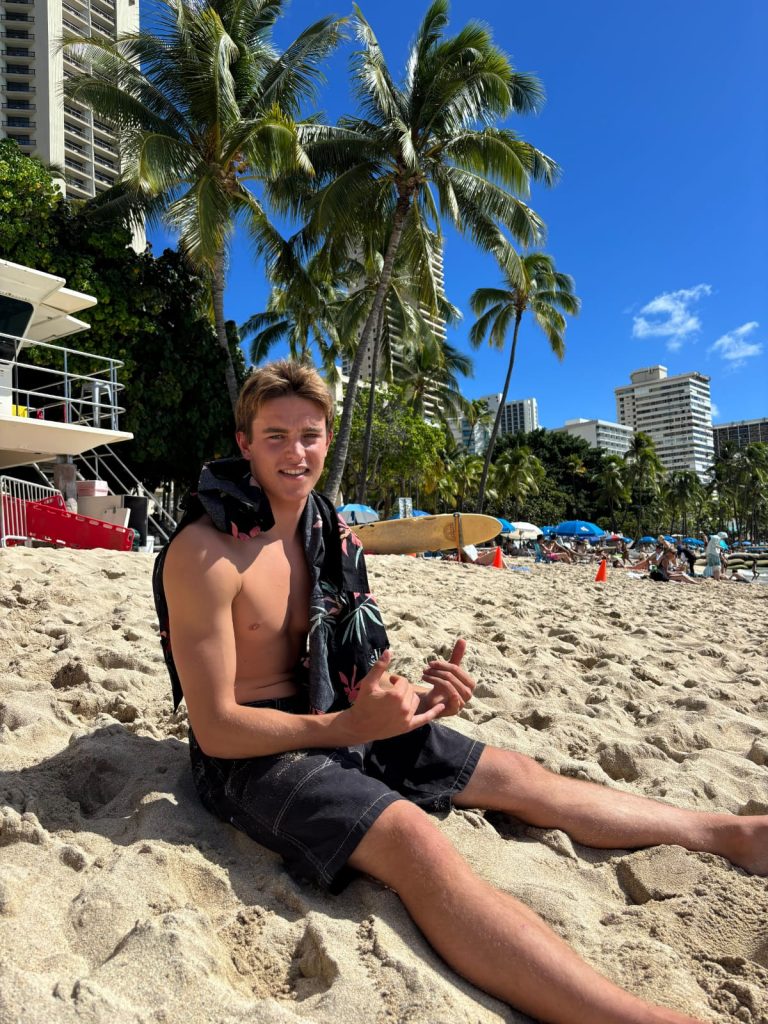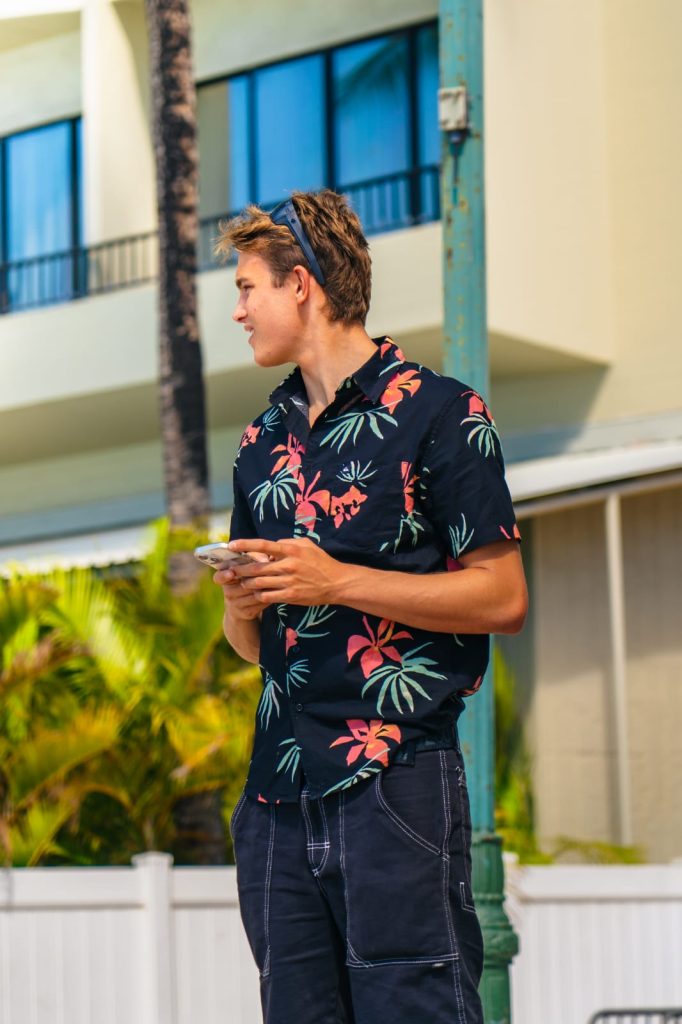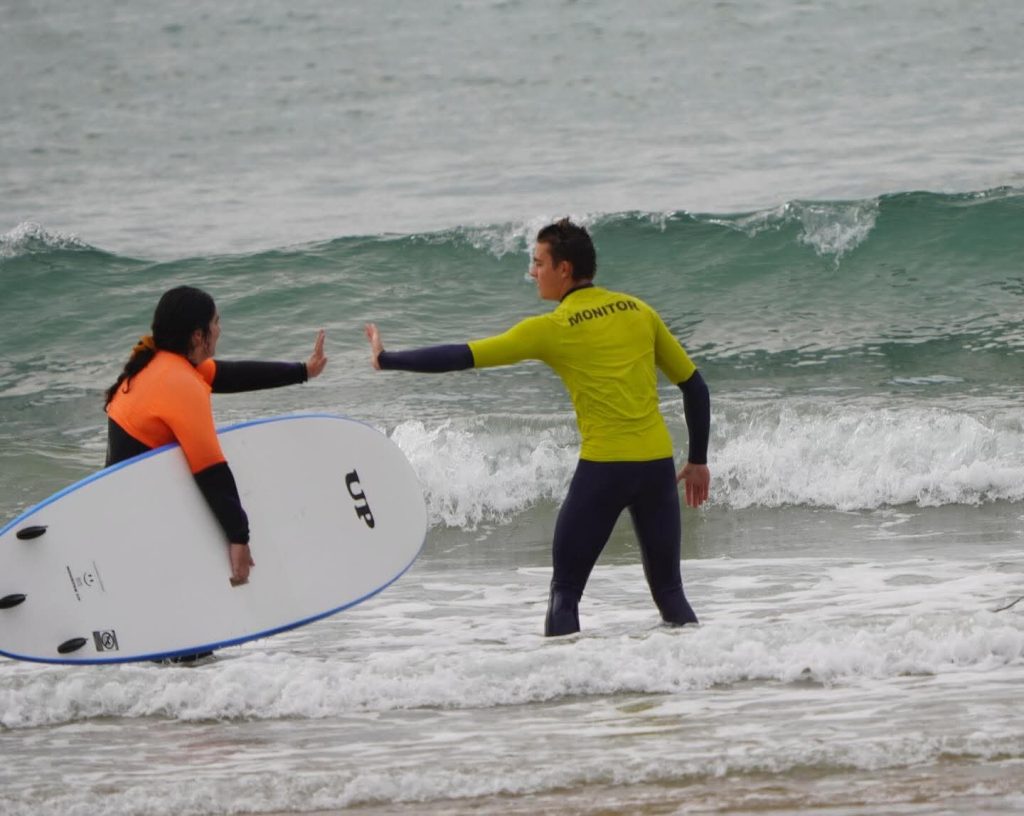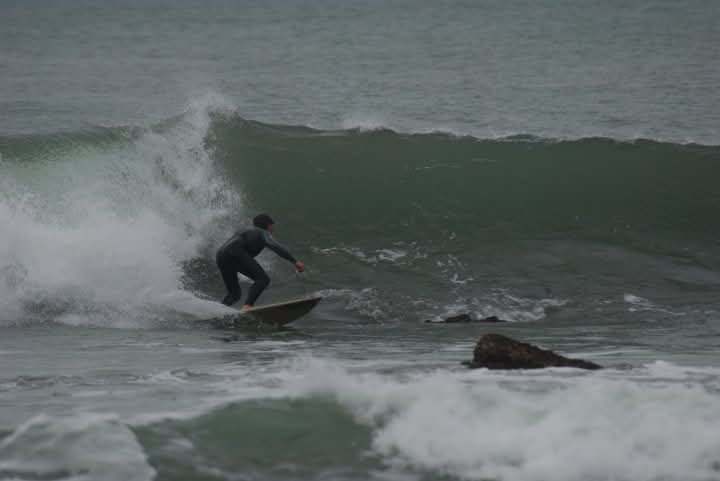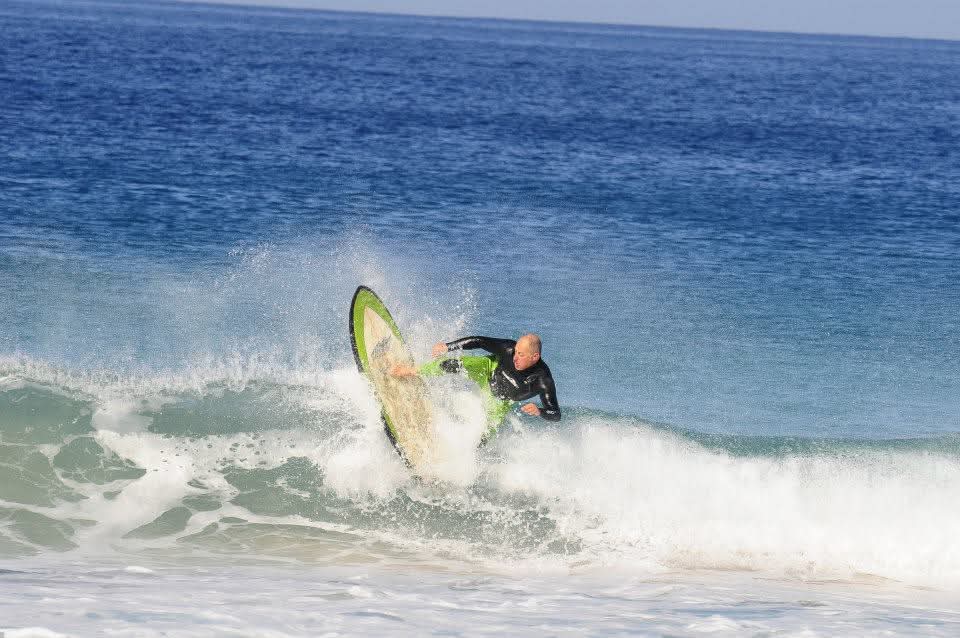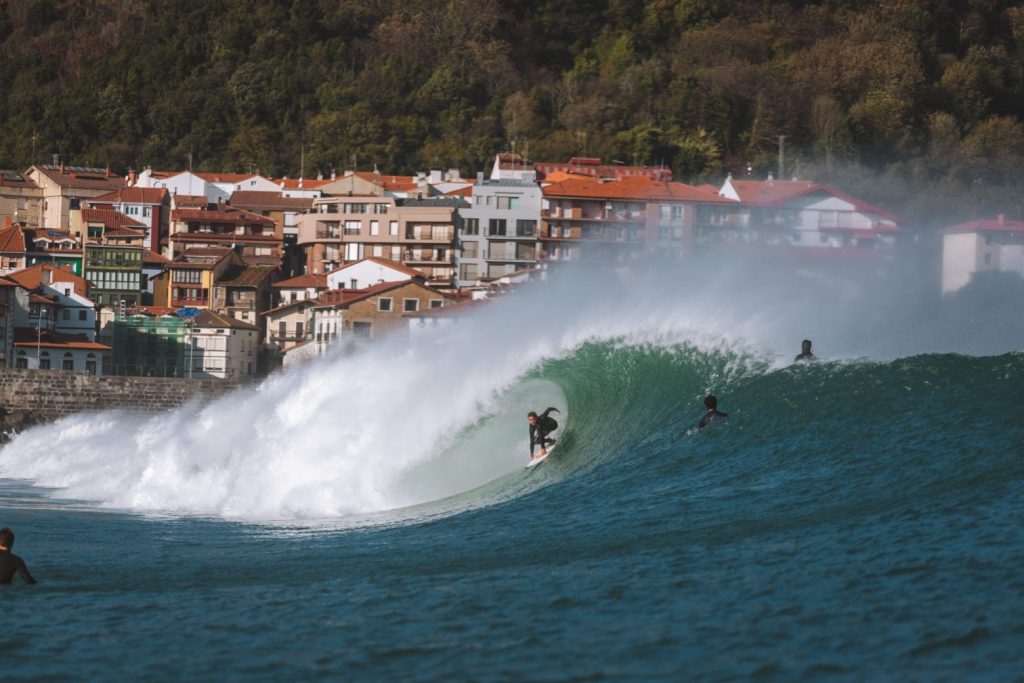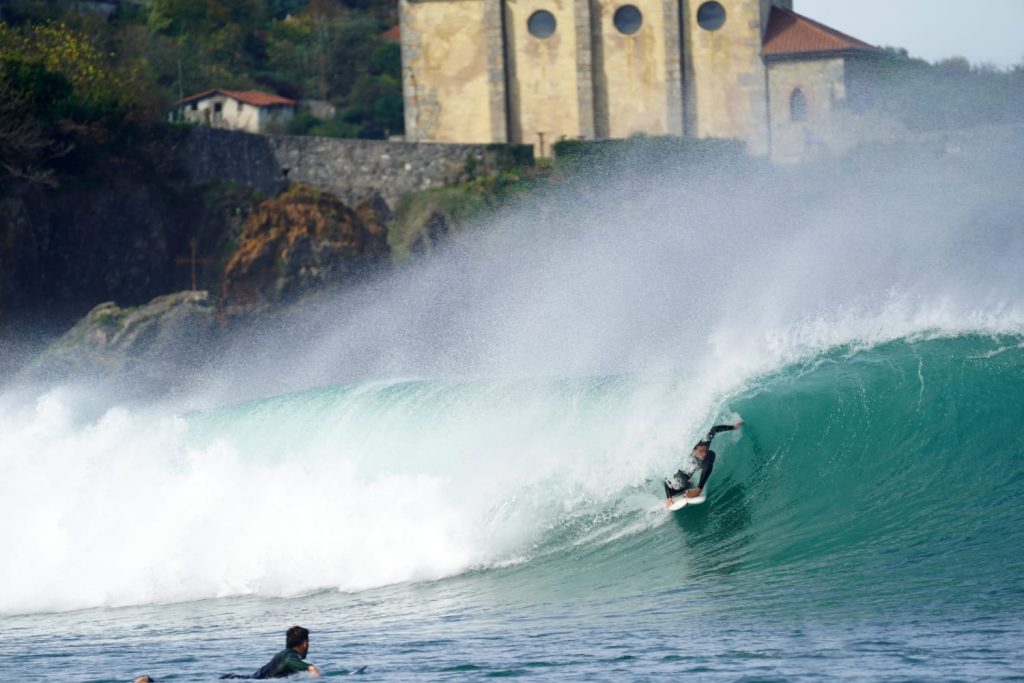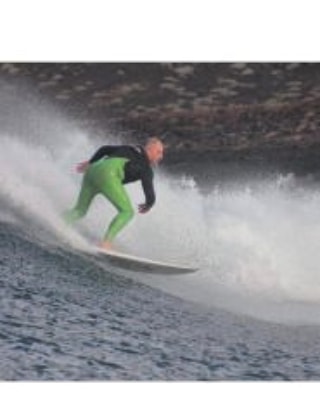
All photos: Markel&Javi
All you need to know about surfing in Bizkaia: where to go and how to start with Uribe Kosta Surf Eskola
Author: Mariya Zantsevich
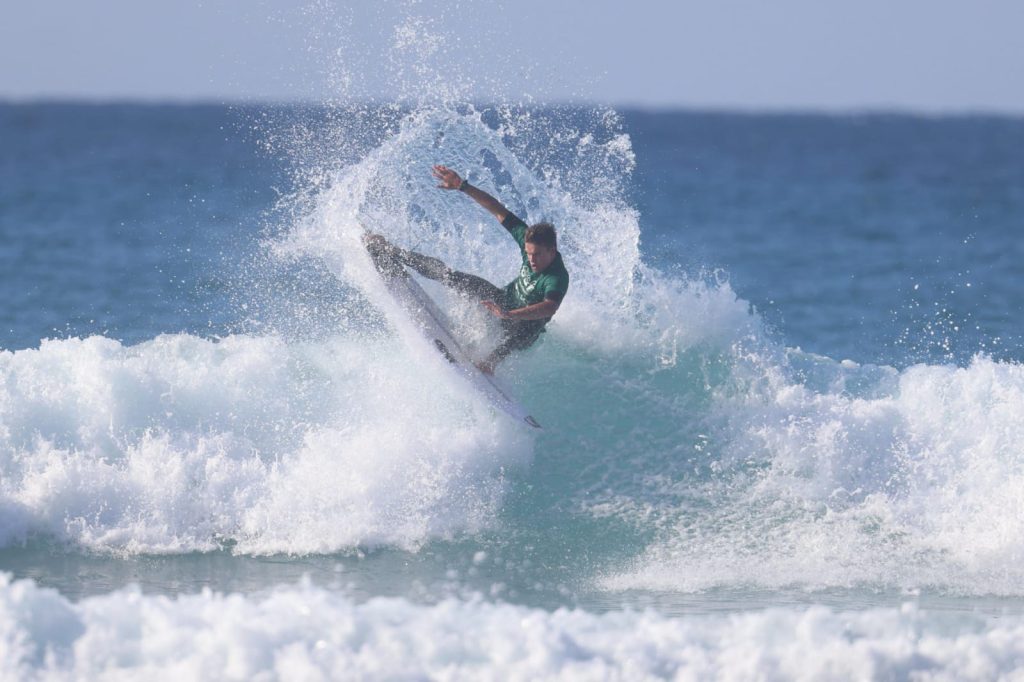
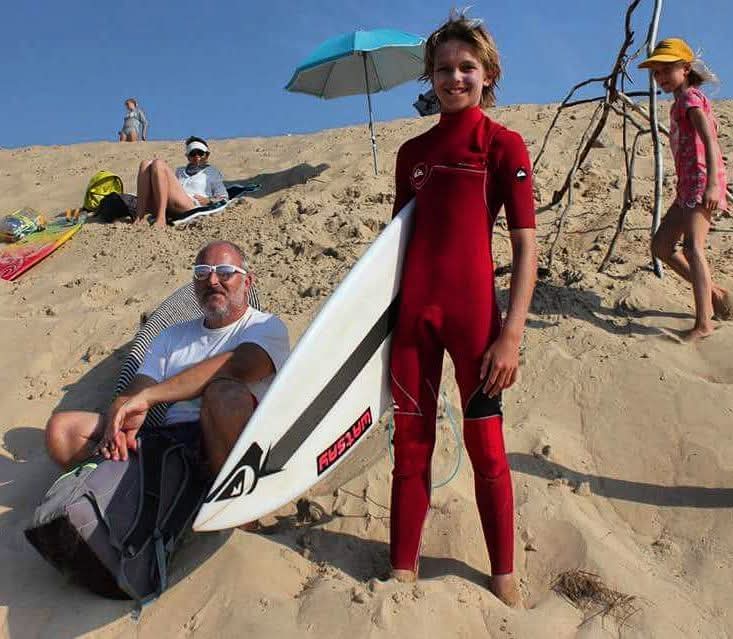
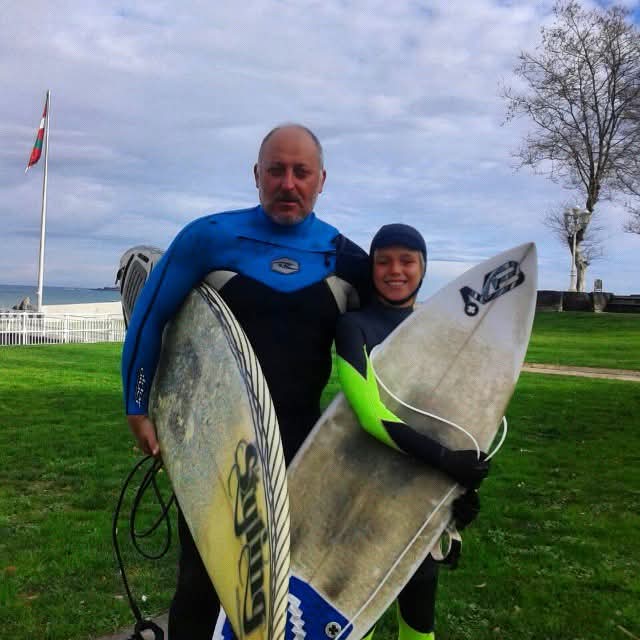
It was that day when Plentzia bay was so smooth it felt like someone unplugged the Atlantic. No bumps, no lines, not even a teasing ripple to misread as a set. Surfers call this kind of wave drought “flat”. But for me, it was the perfect opportunity to line up my surf insiders for an interview. What followed is your ready-to-surf guide to the best Bizkaia spots for beginners and intermediate surfers, put together by Javier Bizkarguenaga — the man who’s surfed for over 40 years — and his son Markel Bizkarguenaga Aguirre, former multi-time Basque surfing champion. With a few small but crucial tips from Markel as the cherry on top.
Short essay about Uribe Kosta Surf Eskola uribekostasurfeskola.com:
The owner — Javier Bizkarguenaga, a Basque surfer who’s been riding waves for over 40 years. He started long before webcams, or forecast apps and knows every rock, every sneaky current and spot between Bilbao and the cliffs of Cabo Ogoño. Javier opened his school 22 years ago and has since become one of Europe’s top judges at surf contests and competitions. On top of that, he still holds European records in several water and ocean-based Hobbies Sports events.
His son — Markel, the school’s head instructor and co-owner. A multiple-time Basque and Worldwide surfing champion (1• Grom search Europe Rip Curl
Sub 16; 2•Pro Junior World Surf League Casablanca (Morocco); 3•European Ranking Pro Junior World Surf League; 1• Mundaka Open Ehsf; 1• Basque open circuit, etc), he’s an experienced, attentive coach who knows how to guide students with both skill and care.
Together, father and son have built a trusted crew of instructors whose main goal is to help you truly understand surfing and learn how to observe the Ocean. There is always a difference: standing up on a board can happen on your very first lesson, but staying in love with the sport is another story.
The spots you’d better know if you are up to surf in Bizkaia of Basque country
Plentzia
Plentzia, Gorliz
Best for: beginners-intermediate
Tide: medium to low is ideal, especially to manage the currents
Wave: rights, lefts, great for learning longboard techniques
These spots are perfect for beginners, though intermediate riders can have fun too when conditions are right. Plentzia is perfect for longboarding. Probably the best spot in the area for smooth, mellow rides. There are several areas to surf in: left, called River Spot, middle and more right peak. For River Spot, medium to low tide is usually better because of the current: when the tide is going down, the current pushes you outside toward the river area; when it’s coming in, it goes toward the river. The current also can help you paddle out, but stay alert: it can push you too far, so approach the spot from the side.
Lifehacks:
Beginners may want to stick to the middle of the beach to find consistent, gentle waves.
SOPELANA & LA SALVAJE AREA
El Sitio
Level: not recommended for beginners
Wave: mostly left, but both directions possible
A rocky spot in front of the Sopelmar Club Social which rarely works with stronger swell. Waves appear only occasionally, and even Javier has barely seen people surf it. Pure rock, tricky access, and inconsistent shape — definitely not a go-to option for learning days.
Atxabiril / El Peñón
Tide: mid to high
Best for: intermediates
Wave: beachbreak; lefts and rights
This is Sopelana’s classic training area. A mellow beachbreak with approachable walls and plenty of space to learn. On a dropping tide, an outer left sometimes breaks in front of the rock — punchier and for more advanced riders. Come mid-summer, expect crowds. Friendly walls on a mid–high tide, come on a small swell if you are not experienced.
La Corriente
Tide: mid–high
Best for: Intermediate
Wave: mostly right, some lefts
Right in the center of the Arrietara beach, La Corriente has earned its name honestly — “currents” in English. In the center of the beach, the water moves constantly, making it both a challenge and a perfect workout. Great for practicing positioning and paddling strength.
Larrabasterra:
Tide: mid–high
Best for: inside is ok for beginner-intermediate, the outer left is for experienced surfers only
Wave: mostly right, some lefts
In front of surf schools lies a forgiving spread of lefts and rights. But paddle out on a low tide and you encounter Sope Atras, an outer left that’s heavier, hollower, and far less forgiving.
El Pasillo
Tide: mid–high
Best for: beginners-intermediates
An inside sandbar in front of the surf school area. Soft, short, manageable.
La Reserva (outside of El Pasillo)
Tide: works on most tides
Best for: intermediate–advanced
Wave: mostly left; some rights
Farther out lies La Reserva — heavier, longer, and more defined. A favorite for stronger days. It’s a legit wave, but requires solid paddling and timing. Just don’t mix up the two El Pasillo and La Reserva; the jump in power is dramatic.
La Triangu complex
La Izquierda de La Triangu
Best for: experienced
Tide: low
Wave: heavy left
On the very outside of La Triangu lies a left that demands respect. Sharp, powerful, and rock-framed, it awakens only with proper swell and low tide. A wave that punishes mistakes quickly. Definitely not a beginner’s playground.
The Right of La Triangu
Best for: intermediate–advanced
Tide: mid–high
Wave: right
A tricky right with deceptive walls — looks like it’s offering long lines, but often sections out. The wall is deceptive, fading and reforming when it wants. Easier on a longboard; shortboarders need precision. Can hold up to 3–4 m.
La Corriente (Triangu version)
Best for: advanced
Tide: low
This one sits right next to the channel between La Triangu and the inside section. Extremely heavy currents — “like a gym,” Javier says. Requires nonstop paddling.
Warning: swimming here is dangerous, people have been swept into open ocean here; local lifeguards keep it under red flag constantly in summer.
Middle spot (right across from the path down to Barrienatxe)
Best for: may be for all levels depending on swell and conditions
Wave: rights, lefts — depending on a lot conditions
Lefts and rights peel down the center of La Salvaje. Pretty comfortable for learning — unless the swell angle flips, then everything changes.
Azkorri
Best for: advanced
Wave: left and right
A powerful, technical wave visible from La Salvaje when the swell is big. Breaks far from shore. Heavy water, dangerous conditions, not many people out. Requires solid surfing and confidence.
Getxo
Punta Galea
This spot is for experienced surfers and pros only, but we can’t skip it. And here’s why: Punta Galea is a legend in big wave surfing, where the Atlantic throws down some of the heaviest, most powerful swells in Europe. Waves can soar 8–12 meters, making it the home of the Punta Galea Challenge, one of the most prestigious big wave contests. Best swells hit in winter.
Puerto Viejo – Jeffry’s, middle part
Best for: intermediates
Tide: mid-low tide, needs strong swell
This spot works rarely on a big swell, but beware: the lineup can get crowded. Better for longboarders. The spot has a reputation — a lot of accidents have happened, partly because the water can be messy. Runoff from the city used to make it dirty, though conditions have improved in recent years.
La Arena
Best for: all levels depending on section
Right section: mostly rights, consistent
Middle: lefts, rights
Left section: mostly for locals, powerful left near the river mouth
Tide: low–mid
Less crowded than Sopelana, more raw than Plentzia, and home to long, satisfying rides. Strong currents keep you honest. Right side is more forgiving; left side is much stronger. Local energy is strong but respectful.
Bakio
Three zones:
El Puerto
Best for: Intermediate–Advanced
Tide: mid–low
Wave: right, sometimes left
Can hold huge swells; sometimes hosts local big-wave contests. When the swell is massive, this place turns into a serious arena.
El Cajellon (in the middle)
Best for: all levels depending on size; crowded with locals
Wave: lefts and rights
The most popular Bakio peak. Shifts depending on tides and sand. Lots of local surfers.
Peña Rojas
Best for: intermediate
Wave: mostly rights
Friendlier than the Puerto, more structured than the Cajellon, offers playful rights on the correct tide.
Mundaka
Best for: intermediate (on rare mellow days)–advanced
Tide:
Low tide: best, hollow, fast, and VERY crowded
Medium–high: mellower, fewer tubes, fewer people
Another pro spot we can not skip from mentioning. It’s not just a wave, it’s a world class standard. A perfect sand-bottom left with two sections, requiring precision, speed, and patience. If you can surf Mundaka well, you can surf almost any left on the planet, Javier claims.
And what to do for beginners? Schools take them to Laida, across the river, where the water is calm and the risks manageable.
Laga (near Cabo Ogoño)
Best for: beginner–intermediate when small; experienced when bigger
Tide: low-mid
Wave: mostly right near Cabo Ogoño; lefts and rights in the middle
A stunning beach with fewer crowds than Bakio or Sopelana. Works with medium swell. Near the Ogoño cliff, the right-hander becomes the best wave of the beach. On small days it’s friendly; on big days, powerful and demanding.
Ogeia
Best for: intermediate–advanced
Tide:low–medium
Wave: reef break; good lefts and very good rights
A rocky reef break that works best with a strong swell. According to Javier, it’s one of the best waves in the area, located just outside the beach, with picturesque, like water-colored mountains in the background. Best attended at low to medium tide. It’s not for beginners, but it offers an unforgettable ride for those who can handle it.
Lekeitio
Best for: beginner–intermediate on small waves; experienced on bigger swells
Tide:medium–low
Wave: lefts at Isuntza, rights require strong swell; rocks and sand
Two beaches side by side, each offering its own character. Lefts at Isuntza are accessible and fun; rights need a big swell.
La Isla — a right-hander working best at low tide, with good lefts on bigger days. At medium tide, you can still find some waves in the middle of the beach. Perfect for exploring different sections depending on swell and tide, but keep an eye on the rocks.
As the final touch, there are few tips for the beginners from Markel.
Are you a beginner who just started or want to start but are scared of surfing or just don’t know what to do? Here is your next steps:
If you’re afraid of surfing, start small and work your way up. Fears arise when we think we already know everything and suddenly find ourselves surfing in rough waters in an unfamiliar place. You can always hire a professional to advise you on what to do and how to improve.
If you’re afraid because you’ve never surfed before, you should start with the smallest waves you can find, with the waves reaching your ankles or knees, using a softboard with plenty of volume. This will make it easier for you to catch the wave, regardless of its size, do the take off and get some feelings. From then on, get in more often, with small waves, and gain confidence in your abilities. Then, get in with bigger waves when you feel more confident.
Thinking on how to build confidence, stamina and some lifehacks to progress? Ok, here you go:
Confidence is gained by working at it, as with anything else in life. The more you practice standing up, riding the wave, and feeling safe where you surf, the more your confidence will grow. And if you have the help of a professional to guide you, that confidence will surely increase faster.
Finally, the tip I would give for progressing is, before surfing if you have never surfed before, to practice your takeoff well outside of the water, then visualize where you are going to enter and what you are going to do when you enter the water, and put in the hours. That’s how you improve.
Short sessions are more productive, 1 hour maximum, less fatigue, more energy, more attention, focus, and more action.
What to do if you are stuck with your progress and lose your motivation:
It’s normal to some times stuck and lose motivation when surfing for beginners. The learning curve is slow and not always linear. When this happens, it’s best to reconnect with the enjoyment of the ocean without putting pressure on yourself to improve. Change your routine: try a different board, go to a different spot, or take a lesson. Surfing with other people can also motivate you. Celebrate small advances, even if they’re minimal. And if you need to take a break for a few days, do it: rest is also part of progress. The important thing is not to forget why you started.